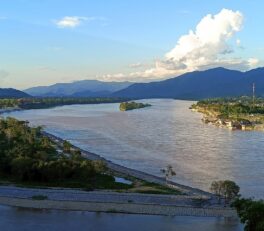
Golden Triangle Mekong River Chiang Rai — The Lifeblood of Southeast Asia

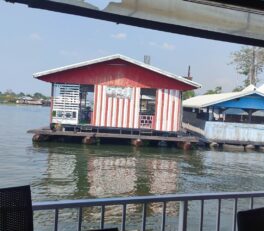
Golden Triangle Mekong River Chiang Rai. The Lifeblood of Southeast Asia. Rivers have long been the source of vitality, nourishing the lands through which they flow. From tiny springs hidden among lush mountains, streams gradually …

Continue reading

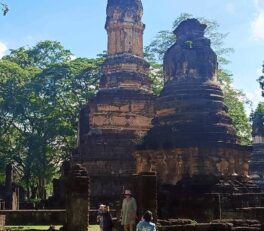
Si Satchanalai, An ancient town in Sukhothai Province

Si Satchanalai, an ancient town in Sukhothai Province, is one of Thailand’s most treasured historical destinations. Once flourishing as an important center of politics, religion, and culture during the Sukhothai Kingdom, the town still preserves …

Continue reading

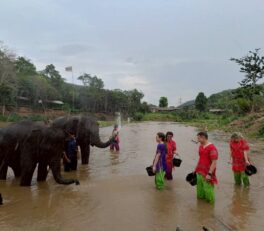
Elephant

Discover the Beauty of Chiang Mai with an Unforgettable Elephant Adventure! Experience the magic of Chiang Mai, Thailand, where nature, culture, and adventure come together in one amazing journey. Join us for a special day …

Continue reading

Fresh coconut sugar bar 

Don’t say that you don’t like sweets! Even if you say that you don’t eat  sweets, you can’t say that you don’t eat anything sweet at all. There is always some sweet taste in the food …

Continue reading

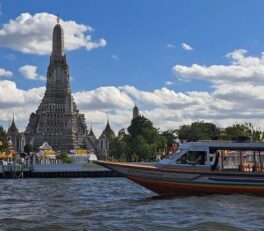
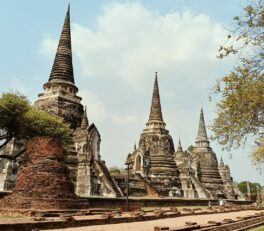
Ayutthaya Old Historical Site.

When you are on your vacations, Holidays or travelling, you may visit many historical sites and of course, Southeast Asia is one of your planned places to visit Ayutthaya Thailand is one of them on …

Continue reading

Kanchanabury

Kanchanabury, the 3rd biggest province in Thailand. Located in the west side of Thailan by Myanmar border. It is famous among the tourists as the World War 2nd historical site such as the famous death railroad and …

Continue reading

Northern Thailand, land to explore.

Thailand northern region consists of Chiang Mai (the main capital of Lanna or the northern region, Chiang Rai, Lamphun, Lampang, Phayao, Phrae, Nan, Mae Hong Son and Uttaradit province.  Each province has its own unique environment …

Continue reading

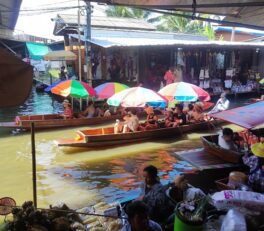
Damnoen Saduak Floating Market, Ratchaburi , Thailand

In the past, people travelled by horses, ox-carts, elephant riding or walking when they lived on land or up the mountains. However the people who lived nearby rivers or canals, they would use the rafts …

Continue reading

Thai pancake “Khnom Kroak”

Khnom Kroak, the Thai pancake

The most common Thai dessert foreigners know might be mango sticky rice, and that’s it. But, there are actually many others that are very tasty and easily found almost everywhere. One of the most famous street desserts is called khnom kroak or they easiest way to explain it could be ‘the Thai coconut-rice pancake. The size of this pancake usually is a lot smaller than the normal western pancake and the ingredients are also different too.

Thai pancake can be found in most local markets. Or, street vendors make this type of dessert by putting the pan and stove on their motorbikes adapting them as the mobile shops. One can notice by looking at the metal pan with small sinking parts/ little pans in one big pan, similar as the one used for making tokoyaki.

The 2 main ingredients are rice flour and coconut milk. There are 2 main flavors choose depending on the preference of the customers; sweet and salty. If it is the sweet ones, sugar will be added into the 2 main ingredients or sometimes the pancake maker add sugar later on top of the cooked pancakes before serving them to his/ her customers. For the salty ones, a bit of salt is added into the ingredients that has been making as the thick liquid by mixing with the water.

Once the pan is heated up, the seller would scoop up the ready mixed liquid using the round spoon and fill it in each small part in the big pan. It takes around 4-5 minutes to be well cooked. It will be a bit crunchy on the outside and soft custardy inside the little pancakes, with very nice smell. Usually for the salty pancakes the topping is cut green onion leaves whereas the sweet ones have different toppings such as cooked taro or corns. When taken out from the pan, 2 little pancakes will be paired up, that’s the traditional and complete way to make Thai pancake.

Usually fresh banana leaves are used as the plates to put the pancakes that are sold to people. It costs around 10-20 baht for a plate that has between 5-8 pairs of those little pancakes. Customers usually pay and then walk around and eat the dessert using the small stick to pick up the pieces and put into their mouths… hmmm so yummy.

www.bangkoktourcenter.com

Amphawa floating market

Amphawa Floating Market. Since Bangkok is located at the very end of the mighty Chao Phraya River that makes its end at the gulf of Thailand, this means it is the delta where there are …

Continue reading